What Makes a Dental Office Feel Modern, Safe, and Patient-Centered
Cluster: Choosing a Dentist & Treatment Planning | Content Type: Best Practices | Funnel: Top of Funnel
Summary: A dental office that is truly modern and patient-centered shows it in observable, specific ways—from infection control to how staff communicate. Knowing what to look for makes it easier to evaluate a new practice or assess whether your current one meets a high standard.
Why This Matters Beyond Aesthetics
The appearance of a dental office is easy to notice, but the more meaningful signals are harder to see at first glance. An office with new paint and a stylish waiting room is not automatically a high-quality practice. Conversely, an older-looking facility may be running excellent sterilization protocols and using current diagnostic tools.
What separates a modern, safety-conscious, patient-centered practice from one that is not falls into a few categories: infection control, technology, communication, and care continuity. Each can be evaluated with the right observations or questions.
Infection Control: The Non-Negotiable Foundation
The CDC publishes detailed dental infection prevention guidelines that establish minimum standards for every dental practice. What you can observe as a patient:
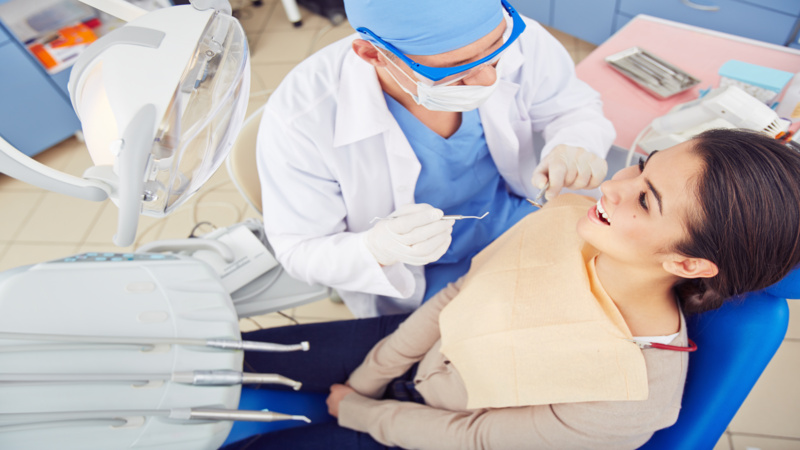
- Staff washing hands or using hand sanitizer before glove use and between patients
- New gloves for each patient—gloves should be put on in front of you
- Instruments wrapped in sterilization pouches, opened in front of you at the start of treatment
- Surface barriers on frequently touched equipment: chair controls, light handles, bracket table
- Use of disposable items where applicable: cups, suction tips, air/water syringe tips
You should not see unpackaged instruments left out from a prior appointment, or staff re-using instruments that should be single-use. If you notice something inconsistent with clean practices, it is appropriate to ask.
Technology That Improves Diagnostic Accuracy
Modern dental diagnostics have advanced meaningfully. Specific technologies that indicate a practice is keeping current:
- Digital X-rays: lower radiation than traditional film, faster results, and images that can be zoomed for better visualization—most modern practices use digital radiography
- Intraoral cameras: small cameras that let you see your own teeth on a screen, supporting transparency and helping you understand what your dentist is seeing
- Cone beam CT (CBCT): 3D imaging for complex cases, more common in specialty practices but increasingly available in general dentistry
- Digital impressions: some practices use intraoral scanners instead of impression trays, which is more comfortable and faster
The American dental association’s infection control guidelines are also a useful reference for understanding the standards that responsible practices follow.
Communication as a Quality Signal
Patient-centered care is most visible in how staff and providers communicate. Signs that a practice prioritizes this:
- The dentist explains what they are seeing and recommending before assuming you will agree
- You receive a written treatment plan with costs before any non-emergency work begins
- Questions are answered directly, not deflected or dismissed
- The front desk communicates clearly about scheduling, insurance verification, and billing before you have to ask
- You are told what to expect after a procedure, including what is normal and when to call
This clarity becomes especially relevant when navigating treatment sequences—understanding what happens if you whiten a tooth after root canal treatment requires a dentist willing to walk through the implications clearly.
Care Continuity and Record Keeping
A practice that maintains thorough records and follows through on treatment plans provides something genuinely valuable. Specific things to look for:
- Updated medical history and medication lists reviewed at each visit
- If a treatment plan was created at a previous visit, the dentist or hygienist knows what was planned and asks about it
- X-rays taken on a reasonable schedule—neither reflexively at every visit nor almost never
- Problems identified for monitoring are flagged consistently at subsequent appointments
Continuity matters most in detecting slow-moving problems—gum disease progression, cracked tooth syndrome, or early-stage cavities that could be managed with less intervention if caught early.
Questions Worth Asking a New Practice
When evaluating a new provider, a few direct questions reveal a great deal:
- How do you approach treatment recommendations for new patients—do you do a comprehensive exam first before recommending any work?
- What digital diagnostic tools do you use?
- If I have a dental emergency outside office hours, what is the process?
- How do you handle a situation where I want a second opinion before proceeding with treatment?
Specific scenarios—like knowing the right appointment to book, or understanding what to expect after a procedure like bleeding after an extraction—are easier to navigate when your dental office communicates clearly from the start.
Questions About Makes Dental Office Feel Modern Safe Patient-Centered
For Makes Dental Office Feel Modern Safe Patient-Centered, this part of Questions About Makes Dental Office Feel Modern Safe Patient-Centered focuses on the symptom history, previous treatment, current medicines, and the result the patient values most before treatment is scheduled, with the same details verified while recovery expectations are clarified. The clinician should also explain which examination finding supports each recommendation and what information could change it for Makes Dental Office Feel Modern Safe Patient-Centered when a second opinion is considered, using the examination and health history rather than a general assumption.
Clinical Checks for Makes Dental Office Feel Modern Safe Patient-Centered
For Makes Dental Office Feel Modern Safe Patient-Centered, this part of Clinical Checks for Makes Dental Office Feel Modern Safe Patient-Centered focuses on confirmed findings, measurements, imaging, and health-history factors when maintenance is discussed, with the same details verified while recovery expectations are clarified. The clinician should also explain what remains uncertain and whether another test or specialist opinion would alter the plan for Makes Dental Office Feel Modern Safe Patient-Centered during the initial review, using the examination and health history rather than a general assumption. Recording that explanation gives the patient a clearer next step for Makes Dental Office Feel Modern Safe Patient-Centered when maintenance is discussed, especially when follow-up duties are reviewed while recovery expectations are clarified.
Comparing Options for Makes Dental Office Feel Modern Safe Patient-Centered
For Makes Dental Office Feel Modern Safe Patient-Centered, this part of Comparing Options for Makes Dental Office Feel Modern Safe Patient-Centered focuses on benefit, limitations, durability, maintenance, timing, and total cost while comfort and function are assessed, with the same details verified while recovery expectations are clarified. The clinician should also explain how each choice preserves tooth structure or tissue and what backup treatment may be needed for Makes Dental Office Feel Modern Safe Patient-Centered while recovery expectations are clarified, using the examination and health history rather than a general assumption.
A Standard Worth Holding
No single feature makes a dental office excellent. It is the combination of consistent infection control, appropriate technology, clear communication, and follow-through on care plans that creates an experience patients can rely on over time.
When evaluating your current practice or looking for a new one, prioritize what you can directly observe and what you learn through direct questions over surface-level impressions. If you are just starting the process of selecting a dentist, reviewing your options for exam, cleaning, or consultation appointment types can help you understand what the first visit should include.
Next Steps for Makes Dental Office Feel Modern Safe Patient-Centered
A practical plan for What Makes a Dental Office Feel Modern, Safe, and Patient-Centered should identify the first action, reasonable alternatives, expected maintenance, and the consequence of waiting. Before leaving a visit about What Makes a Dental Office Feel Modern, Safe, and Patient-Centered, confirm the follow-up date and the symptoms that should prompt earlier contact as the long-term result is reviewed.