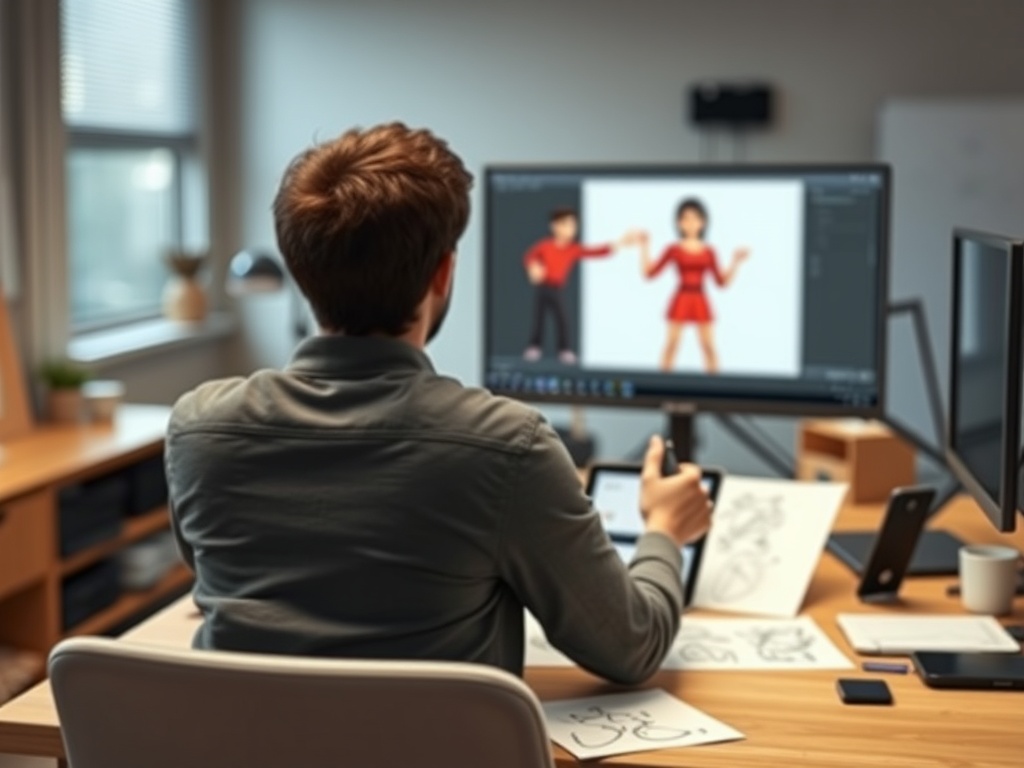
Exhibition design changes memory because visitors do not absorb objects in isolation. They remember what the layout, lighting, labels, pacing, sound, crowd flow, and emotional sequence helped them notice.
Summary: A strong exhibition is not only a set of important objects. It is a designed visitor journey that guides attention, reduces confusion, supports interpretation, and leaves people with a clear structure for remembering what they saw.
Design Turns Content Into a Visitor Path
Museums and galleries often begin with objects, research, or a curatorial theme, but visitors experience those ideas as space. The Smithsonian Exhibits guide to exhibit development describes exhibition work as a collaborative process involving planning, content, design, and visitor experience. That collaboration matters because memory is shaped by sequence: what visitors see first, what they compare, where they pause, and what they miss.
A label beside a painting, a bench facing a video, a narrow doorway, or a dramatic lighting change can all tell visitors where to focus. Those choices do not force one interpretation, but they make some connections easier to notice than others.
The Main Design Levers
| Design Lever | How It Affects Memory | Risk if Handled Poorly |
|---|---|---|
| Sequence | Creates a beginning, middle, and conclusion | Visitors feel lost or remember fragments |
| Lighting | Directs attention and protects sensitive objects | Drama can overwhelm or damage viewing comfort |
| Labels and graphics | Frame key ideas in plain language | Too much text causes skipping |
| Object spacing | Signals importance and comparison | Crowding makes works blur together |
| Sound and media | Adds atmosphere or context | Competes with quiet looking |
| Seating and pause points | Gives visitors time to process | No rest reduces attention |
The American Alliance of Museums frames exhibitions as a primary museum function and points to planning, development, design, and installation as phases of producing them through its exhibitions resources. Those phases are not back-office details; they affect the public experience directly.
Why Visitors Remember Some Objects More Than Others
Objects placed at turning points, entrances, exits, or quiet pauses often gain attention. So do works presented with a strong contrast: scale after intimacy, silence after sound, a single object after a dense wall, or a personal story after technical material. This does not mean those objects are objectively more important. It means the design gave them better conditions for attention.
The same principle helps collectors understand display. A work can feel different once framed, lit, and sequenced, which is why limited edition print comparison should include presentation choices without letting presentation replace documentation.
What Is Changing in Exhibition Practice
Many institutions now pay closer attention to accessibility, multisensory interpretation, audience research, and community context. Cooper Hewitt’s work on transforming museum experience reflects a broader shift toward designing with visitor needs rather than assuming one ideal viewer. That does not mean every exhibition becomes interactive or digital. It means design teams increasingly ask who the experience serves and how different visitors will move through it.
Mistakes That Make Exhibitions Forgettable
- Treating labels as captions after the design is finished instead of part of the visitor journey.
- Crowding too many objects into one room because each object matters internally.
- Using dramatic media that competes with the core artworks or artifacts.
- Assuming visitors will follow a scholarly argument without spatial cues.
- Ignoring fatigue, accessibility, sightlines, and places to pause.
How Smart Visitors Can Read a Room
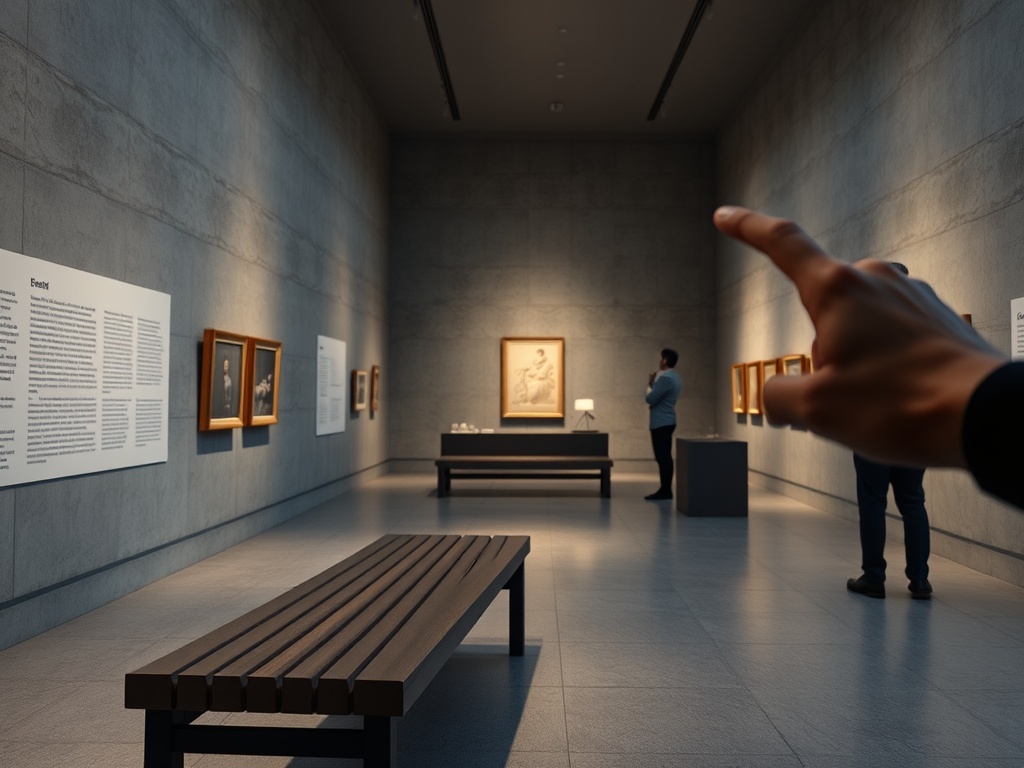
When you enter an exhibition, ask what the room wants you to do first. Look for the largest object, the brightest area, the first label, the path of other visitors, and the places where the design invites you to stop. Then ask what might be outside that frame. This helps you appreciate the design while keeping your own interpretation active.
Design comparison also applies to technical creative work. Just as a museum sets conditions for attention, a designer choosing RGB, CMYK, and print-ready exports sets conditions for how an artwork survives translation from screen to paper.
Questions to Ask Inside the Gallery
A useful visitor exercise is to pause at the entrance and ask what the exhibition is teaching you to do. Does it ask you to move chronologically, compare objects across cultures, follow one artist’s development, or feel an atmosphere before reading details? These cues are part of the argument, even when they are visual rather than verbal.
Then notice what the design makes easy and what it makes hard. Are labels readable? Can wheelchair users share the same sightlines? Do sound elements leak into quiet spaces? Are children, specialists, and casual visitors given different ways into the material? These questions reveal the operational choices behind the emotional experience.
- Look for the first object that stops visitors and ask why it works there.
- Notice where people skip text and where they slow down.
- Compare the final room with the first room to see what changed.
- Treat your own memory after the visit as evidence of design impact.
How to Measure a Memorable Exhibition
A memorable exhibition leaves visitors with more than one favorite object. It gives them a structure: a question, a timeline, a comparison, a feeling, or a shift in perspective. If visitors can explain the exhibition’s central idea later in their own words, design and interpretation worked together.
Museums can measure this through observation, surveys, dwell time, repeat visits, school use, accessibility feedback, and visitor comments. None of those measures is perfect alone. Together, they reveal whether the exhibition served varied audiences rather than only satisfying the internal team.
For visitors, the simplest measure is what remains after a day. Which object do you remember, and what design choice helped it stay with you?
Design also shapes social memory. People often discuss the room where they felt oriented, surprised, or moved, not just the object with the highest art-historical status. That shared conversation becomes part of the exhibition’s afterlife.
For curators and designers, the practical test is alignment. The entry text, route, object placement, media, accessibility supports, and exit moment should all reinforce the same interpretive promise rather than pulling visitors in separate directions.
Look at the Visitor Journey, Not Just the Objects
The next time an exhibition stays with you, notice where the memory formed. It may have started with the object, but it was likely strengthened by the route, light, label, pause, and emotional order the design created around it.