The best home mobility tool is the simplest one that helps you perform a specific movement or self-massage task consistently. A mat, strap, foam roller, small ball, and resistance band cover most needs. More expensive devices may feel convenient, but they do not permanently “break up” tissue, correct an injury, or replace strength and progressive movement.
TL;DR: Buy by problem, not popularity. Use a mat for comfortable movement, a strap for controlled range, a roller or ball for short-term self-massage, and a band for active mobility and strength. Avoid aggressive pressure on injured, numb, swollen, or medically vulnerable areas, and stop if symptoms spread or worsen.
Define mobility before choosing equipment
Mobility is the usable range of motion you can control for a task. Flexibility describes available range, while strength and coordination determine how well you use it. A person may feel stiff because of prolonged positioning, unfamiliar activity, protective muscle tension, joint restriction, or injury. One tool cannot solve every cause.
Choose a target movement, such as reaching overhead, rotating the upper back, bending the ankle for a squat, or comfortably getting to the floor. Measure it simply and without pain. Then select a tool that helps practice the range or reduces discomfort enough to move, rather than buying a device first and inventing a need.
The high-value basic kit
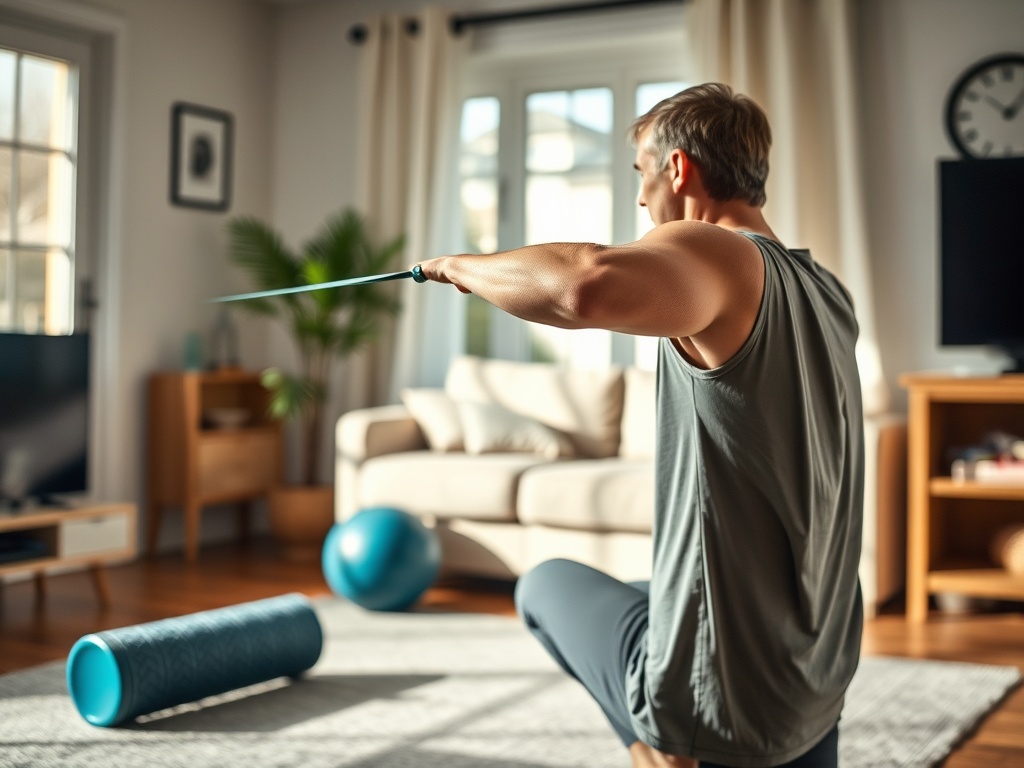
A nonslip mat creates a comfortable surface. A long strap or towel assists controlled stretching without forcing a joint. A medium-density foam roller works well for larger muscle areas. A small ball reaches more localized areas, while a light resistance band supports active shoulder, hip, and ankle work.
These tools are compact, inexpensive, and easy to scale. They also pair well with the broader approach in building endurance for everyday life, where usable movement must connect to walking, strength, and balance rather than remain a separate ritual.
What foam rollers can realistically offer
Foam rolling may temporarily increase range of motion and change soreness perception for some people. A systematic review and meta-analysis found range-of-motion effects from foam-rolling training, but protocols and outcomes vary. This supports limited, purposeful use, not claims that rolling permanently lengthens muscle or dissolves scar tissue.
Use slow passes over a tolerable area for a brief period, then retest the target movement. Pressure should feel manageable, not sharp, electric, or numbing. More pain is not evidence of more benefit. Avoid rolling directly over bones, the front or side of the neck, acute injuries, or areas where a clinician has advised against pressure.
When a ball is useful
A massage ball can target the sole of the foot, gluteal muscles, upper back against a wall, or other areas that tolerate pressure. The wall offers easier control than lying on the ball. Use breathing and small position changes rather than grinding aggressively.
Balls vary in firmness and size. Start larger and softer. A very hard, small ball concentrates pressure and can irritate sensitive tissue. Do not press into the abdomen, throat, joints, varicose veins, wounds, or areas with impaired sensation.
Bands turn range into active control
A resistance band can assist or resist movement. It is useful for rows, shoulder rotations, lateral steps, ankle work, and controlled end-range exercises. This matters because mobility gained passively is more useful when muscles can control it.
Bands should be inspected for cracks, discoloration, or damage and anchored securely. Keep them away from the face and sharp edges. Progress to a slightly stronger band only when movement remains smooth. A band is also a bridge to general resistance work described in strength training for women.
Premium devices: convenience, not necessity
Massage guns provide rapid percussion and may feel pleasant on large muscle areas. Heated rollers, compression boots, vibration platforms, and electrical devices add cost and complexity. Evidence, contraindications, and product quality vary, so marketing claims should be evaluated separately for each device.
Do not use powerful percussion over the neck, head, spine, abdomen, wounds, acute swelling, fractures, or areas with numbness. People using blood-thinning medication, with bleeding disorders, vascular conditions, pregnancy, implanted devices, or other relevant medical issues should seek individualized advice before using devices that apply pressure, heat, vibration, or electrical stimulation.
Build a ten-minute home sequence
Start with two minutes of gentle movement to raise temperature. Use the roller or ball for one or two areas that feel limiting. Follow with a strap-assisted stretch that stays below pain. Finish with band exercises or bodyweight movements through the newly available range. Retest the original movement.
If nothing changes, do not keep adding pressure. The restriction may need a different movement, more strength, less training load, or clinical assessment. If the range improves briefly, repeat the sequence several times per week and gradually rely more on active movement than passive tools.
Storage and setup affect adherence
Keep the kit visible but tidy: mat rolled near an open floor space, band stored away from heat and sunlight, and ball in a small container. Leave enough room to move without striking furniture. Clean shared tools according to their materials and replace damaged bands or cracked devices.
Recovery tools should not encourage you to ignore workload. The review of ice baths, sauna, and recovery hype explains why strong sensations can be mistaken for deeper adaptation. Sleep, food, and a sensible program still determine much of recovery.
Know when self-care becomes assessment
Ordinary stiffness often changes with gentle movement and does not steadily worsen. Symptoms that radiate, produce weakness, disturb sleep, follow a significant injury, or persist despite reduced load deserve assessment. A tool that temporarily masks pain can make it easier to exceed tissue tolerance, so relief should not automatically authorize harder training.
Joint range also differs between people. Not everyone needs the same squat depth, shoulder position, or spinal motion. Compare the movement with your task and your own baseline, not an influencer's demonstration. If a range is unnecessary for daily life or sport, forcing it may add discomfort without useful function.
Evaluate marketing language carefully. Terms such as fascia release, lymphatic flush, activation, decompression, and recovery may describe different things or be used without a measurable definition. Ask what outcome was studied, how long it lasted, and whether the evidence applies to the device in front of you. A clear, modest claim is more credible than a promise to fix the entire body.
A purchase checklist
Before buying, name the movement, confirm that the tool fits the task, check return and safety information, and choose the least complex option that works. After two weeks, ask whether you use it, whether the target movement changes, and whether symptoms remain stable.
Start with a mat, strap, medium roller, ball, and light band only if each has a job. A small, used kit that supports movement is better than an expensive recovery corner that collects dust.