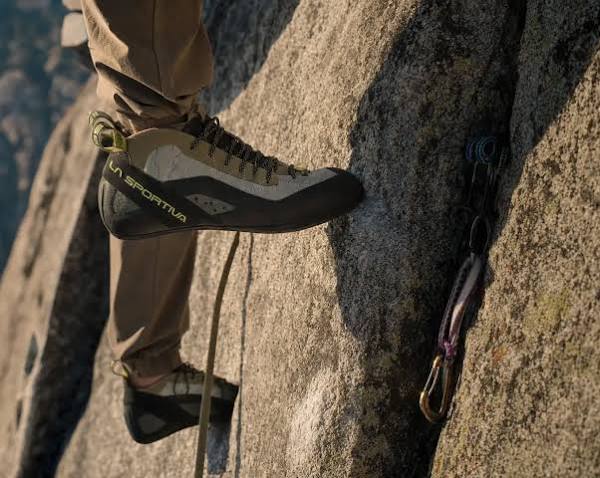
Beginner climbing shoes should fit snugly, support precise foot placement, and remain comfortable enough that a new climber actually wants to practice. Most beginners are better served by neutral or mildly moderate shoes with durable rubber than by aggressive performance shoes designed for advanced problems.
Summary
- Fit matters more than brand, color, or pro-level features.
- Neutral shoes are usually best for first pairs because they support comfort and technique.
- Upgrade only after your climbing style and footwork needs are clearer.
Who this first-pair guide is for
This guide is for climbers moving beyond rentals and wondering what to buy first. Climbing shoes are the contact point between your body and the wall, and REI’s climbing shoe guidance explains the major fit and design choices: type, features, and fit. Beginners do not need to copy elite boulderers. They need a shoe that helps them learn.
Fit: snug, not punishing
A first climbing shoe should feel closer than a running shoe but not painfully curled. Your toes should reach the front. The heel should not bag. The shoe should not create sharp pressure that distracts you after a few minutes. If you are choosing between a precise shoe that hurts and a slightly less aggressive shoe that lets you practice for an hour, choose practice.
Fit also affects drill quality. If you cannot stand on a foothold without flinching, beginner footwork drills become harder to learn because pain competes with attention.
Shape: neutral, moderate, aggressive
| Shape | Best beginner use | Trade-off |
|---|---|---|
| Neutral | Gym routes, easy bouldering, all-around learning. | Less power on steep tiny footholds. |
| Moderate | Some steeper climbing after basics improve. | Can feel less comfortable for long sessions. |
| Aggressive | Advanced bouldering and overhangs. | Often too painful and specialized for first pairs. |
Rubber: sticky, durable, and thick enough
Rubber is where many beginners overthink. Softer rubber can feel sensitive and sticky, but it may wear faster. Firmer rubber can support edging and last longer. For a first pair, durability matters because new climbers drag toes, scrape walls, and experiment. A slightly thicker sole is not a flaw; it can be a budget-friendly learning feature.
Closure systems: laces, straps, and slippers
Laces offer the best adjustment for different foot shapes. Hook-and-loop straps are convenient for gym sessions where you take shoes off between attempts. Slippers can feel sensitive, but they may stretch and fit less securely for some beginners. Try all three if possible and notice heel security, toe comfort, and whether the shoe twists when you stand on a small edge.
Budget and upgrade timing
A practical first pair should be affordable enough that you are not afraid to use it. Do not buy premium aggressive shoes before you know whether you prefer bouldering, top rope, lead climbing, slabs, or steep terrain. Upgrade when your current shoe limits a specific movement, wears through, or no longer matches the style you climb most.
Gear also needs context. Fans planning outdoor or venue days can think about clothing differently in the sporting-events wardrobe guide, but climbing shoes are performance equipment, not casual footwear.
Buying mistakes to avoid
Do not size down because someone at the gym bragged about painful shoes. Do not buy a shoe solely because it is on sale. Do not assume a famous model fits every foot. Do not ignore return policies. And do not keep climbing through numbness or sharp pain just because tight shoes are part of climbing culture.
Choose Shoes That Help You Practice More
The best beginner climbing shoe is the one that fits your foot, supports basic technique, and lets you enjoy enough mileage to improve. Start neutral, prioritize comfort with precision, and let your next purchase be guided by real climbing experience rather than guesswork.
How to try shoes in a store or gym shop
Try climbing shoes late in the day if your feet swell. Stand on a small edge if the store allows it. Check whether the heel lifts, whether the big toe can press without sharp pain, and whether the shoe twists around the foot. Wear each pair for several minutes; the first ten seconds rarely reveal pressure points.
If buying online, order from a retailer with a clear return policy and avoid using the shoes on dirty surfaces until you know they fit. Different brands and models vary widely, so street-shoe size is only a starting point.
Care that extends your first pair
Beginner shoes wear quickly when climbers drag toes or walk around the gym between attempts. Put them on before climbing, take them off between longer rests, and let them dry after sessions. Avoid leaving them in a hot car, which can damage adhesives and smell far worse than necessary.
Resoling may make sense if the upper still fits well and the rubber is worn before holes reach the rand. For a first pair, compare resole cost with replacement cost. Either way, worn rubber is a useful reminder to keep practicing precise foot placement.
[