Cluster: Cleaning, Decluttering & Home Organization | Content Type: Tools/Resources | Search Intent: Commercial Investigation | Audience: Product-Aware | Funnel: Bottom of Funnel
The best storage bins and labels are the ones that make it easier to put items away, see what you own, and retrieve things without unpacking an entire shelf. For most homes, a small mix of clear lidded totes, open-front bins, shallow boxes, and durable labels works better than buying one container style for every room.
TL;DR Match the container to the item and the environment. Use clear or clearly labeled lidded bins for long-term storage, open bins for frequently used items, shallow containers for small parts, and moisture-conscious storage in basements or garages. A simple label system should tell you what is inside and, when useful, where it belongs.
Choose Bins by Access Frequency
Start by sorting belongings into three groups: items used weekly, items used seasonally, and items kept mainly for backup or memory. Weekly-use items benefit from open bins, baskets, or drawers that can be reached with one motion. Seasonal goods can go into lidded bins on higher shelves. Long-term storage needs stronger containers, clear labels, and a location that will not expose contents to avoidable moisture or heat.
This access-first approach prevents a common organizing mistake: placing everything into identical deep totes. Deep bins can look orderly from a distance but become frustrating when the object you need is buried at the bottom. Container depth should follow the size and frequency of the contents, not only the dimensions of the shelf.
Clear Plastic Totes: Best for Visibility and Protection
Clear lidded totes are useful for holiday decorations, spare linens, craft supplies, seasonal clothing, and household backups. Their main advantage is quick visual identification. A lid also offers basic protection from dust and minor splashes. Stack only within the manufacturer's limits and keep the heaviest containers at comfortable lower levels rather than overhead.
In damp storage areas, the container is only part of the solution. The U.S. Environmental Protection Agency's guidance on mold and moisture stresses controlling the moisture source itself. A sealed tote does not fix a leaking basement, condensation, or persistent high humidity. If the area gets wet, elevate important belongings and address the water problem before reorganizing.
Open Bins and Baskets: Best for Everyday Categories
Open-front bins work well in pantries, linen closets, mudrooms, play spaces, and utility cabinets because they remove the extra step of opening a lid. They are especially effective for categories such as cleaning cloths, pet supplies, hats and gloves, reusable bags, or small pantry packets.
The trade-off is exposure. Open bins collect dust more easily and are poor choices for items that need moisture, pest, or chemical separation. They also invite overfilling. Leave enough headroom to remove items without pulling the whole bin down. In a visible room, baskets can soften the look of functional storage, which is useful when you are trying to mix vintage and modern decor without making every shelf feel industrial.
Shallow Boxes and Drawer Organizers: Best for Small Parts
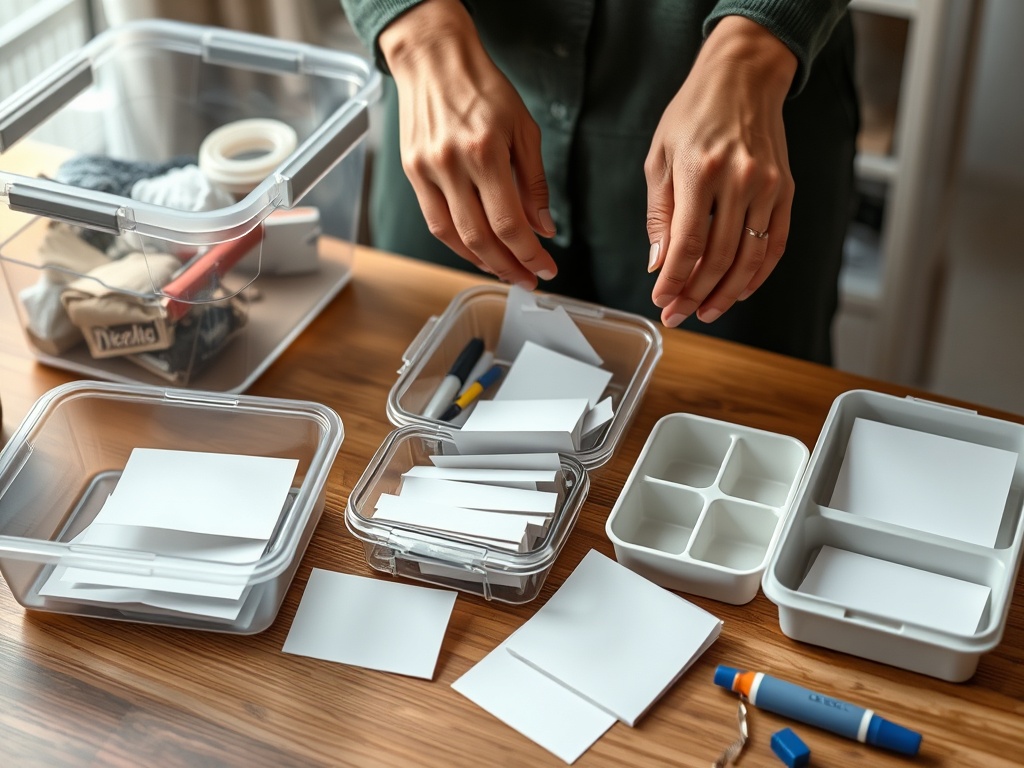
Small objects disappear in deep containers. Shallow boxes, divided cases, and drawer organizers are better for batteries, picture-hanging hardware, sewing notions, cords, office supplies, and craft components. The goal is to reduce layers. If you can see most items when the container opens, you are less likely to buy duplicates.
Use removable dividers when categories change often. Fixed compartments are useful for stable collections, but they can waste space when objects vary in shape. Before buying a complex organizer, lay the items on a table and group them by actual size. That quick test tells you whether you need long channels, tiny compartments, or simply two broad sections.
Labels Should Support Retrieval, Not Decorate the Bin
A useful label answers the question you will ask later. "Cables" may be too broad; "HDMI + Display Cables" is clearer. "Winter" may be enough for a family that keeps one seasonal bin, while a larger household may need "Winter Gloves – Adults" and "Winter Hats – Kids." Use language that everyone in the home understands.
For frequently changing bins, choose erasable labels, removable tape, or label holders with replaceable cards. For long-term storage, printed or waterproof labels are easier to scan. Place labels on the side that faces the aisle, not automatically on the lid. If bins can rotate, add a second label on an adjacent side.
A Shortlist by Room and Budget
| Use case | Practical container | Label approach | Budget note |
|---|---|---|---|
| Pantry packets and snacks | Open-front plastic or metal bin | Category label on front | Start with only high-use shelves |
| Seasonal clothing | Clear lidded tote | Season + person + item type | Standard sizes stack more efficiently |
| Garage hardware | Shallow divided case | Specific part names | Buy after measuring the largest pieces |
| Linen closet | Open basket or shelf bin | Room or bed size | Reuse sturdy baskets before replacing them |
| Keepsakes | Archival-quality box when preservation matters | Date or event range | Spend more only for items worth preserving |
This shortlist is a practical recommendation, not a universal ranking. Material quality, lid design, hinge life, and load limits vary widely between products.
Safety and Special-Use Storage
Do not mix household chemicals into a generic organizing system that makes them look like ordinary supplies. The U.S. Fire Administration's home hazardous materials guidance recommends storing chemicals according to their labels and keeping incompatible or hazardous products safely managed. Keep original product labels visible and do not decant chemicals into food containers.
For homes with children, also think about climbing and entrapment risks. Heavy or attractive bins should not create an improvised staircase to high shelving. Large chests and furniture-like storage deserve separate safety consideration from ordinary open bins.
Make the System Fit the Space
Organization improves when containers follow the room's layout. In a narrow kitchen, consider shelf depth and door swing before adding bulky bins. If you are comparing larger layout changes, an island-versus-peninsula decision can affect how much enclosed and open storage you need. In small rooms, the guide to using mirrors, rugs, and layout to visually expand space can help you avoid turning storage into visual clutter.
Before buying, measure shelf width, depth, and height. Subtract room for fingers, handles, hinges, and lids. Tape those measurements inside your phone or home inventory so you do not rely on memory in the store.
Build an Organizing System You Can Maintain
The strongest storage plan is simple enough to reset in a few minutes. Use fewer container types, label them in plain language, leave some empty capacity, and review categories when a bin becomes difficult to close. Buy additional containers only after the first round shows where the real bottlenecks are.
This home-organization content is for informational and educational purposes only. Follow product safety instructions and seek appropriate professional guidance for moisture, structural shelving, hazardous-material, or other specialized concerns.