Cluster: Interior Design & Decor | Content Type: Comparison | Search Intent: Commercial Investigation | Audience: Solution-Aware | Funnel: Middle of Funnel
Mixing vintage and modern decor works best when the room has a clear visual hierarchy rather than an equal amount of every style. Choose one period or design language as the background, then use the other as contrast through furniture, lighting, art, textiles, or objects with distinct material character.
TL;DR Start with a calm base, repeat two or three materials or colors across old and new pieces, vary shapes and scale, and leave enough open space for individual objects to register. The goal is not to make a vintage item look new or a modern room look old; it is to make both feel deliberately selected.
Decide Which Style Leads
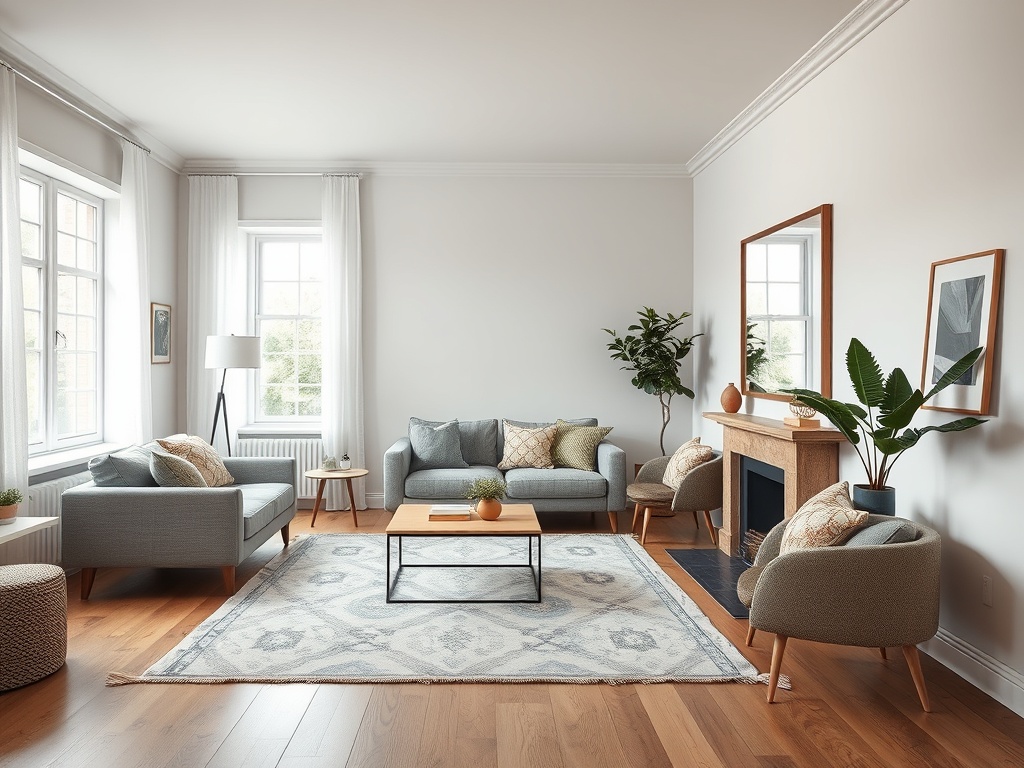
A room is easier to compose when one language provides most of the architecture and large surfaces. In a newer apartment with plain walls and streamlined cabinetry, modern may naturally lead. Vintage character can then come from a wood sideboard, aged brass lamp, framed textile, old mirror, or traditional rug. In an older house with original trim, radiators, plaster, or historic millwork, the architecture may already supply the vintage layer, allowing cleaner contemporary furniture to balance it.
This is a design judgment, not a fixed rule. Historic-interior guidance from the National park service is aimed at preservation projects rather than ordinary decorating, but it offers a useful principle: identify character-defining features before making changes. Even in a non-historic home, knowing what deserves to remain visually dominant prevents every new purchase from competing for attention.
Compare the Strengths of Vintage and Modern Pieces
| Quality | Vintage pieces often contribute | Modern pieces often contribute |
|---|---|---|
| Surface character | Patina, handwork, aged woods, older metal finishes | Clean finishes, consistent color, simple material combinations |
| Shape | Ornamental profiles or recognizable period silhouettes | Streamlined geometry and reduced detailing |
| Practicality | Unique scale or craftsmanship, sometimes less standardized | Current dimensions, wiring, upholstery, and everyday ergonomics |
| Visual role | Focal point, story, texture | Structure, calm, negative space |
These are broad tendencies. A 1970s chrome chair can look highly modern, while a new handmade cabinet can carry traditional joinery. Judge the actual object, not only its date.
Use Repetition to Make Different Eras Feel Related
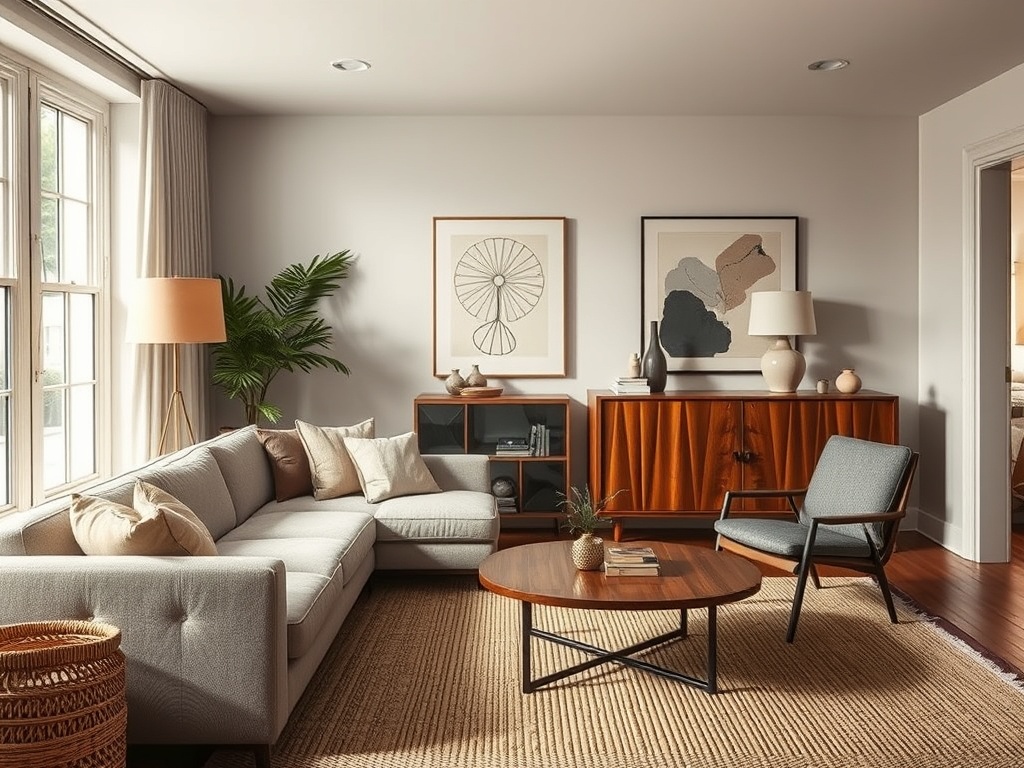
A room feels coherent when materials, colors, or shapes echo across pieces. If a vintage walnut cabinet is the star, repeat a similar warm wood tone in a modern frame or side table. If an old brass lamp sits beside a contemporary sofa, another muted brass detail across the room can make the contrast feel intentional. Repetition should be subtle; matching everything exactly can flatten the effect.
Textiles are a flexible bridge because they can combine old motifs with contemporary scale. A traditional patterned rug under a clean-lined sofa, or modern solid upholstery beside an antique chair, creates contrast without forcing either item to imitate the other. The history of decorative arts shows how designers have long combined architecture, furniture, textiles, and objects into a larger whole; the metropolitan museum of Art’s overview of the arts and crafts movement provides one useful historical example of that integrated thinking.
Balance Shape and Visual Weight
Do not put every ornate object on one side of the room. Visual weight comes from size, color, darkness, detail, and silhouette. A carved cabinet may visually outweigh a larger but pale modern console. If one side feels heavy, balance it with art, a substantial light fixture, a darker rug area, or a modern piece with a stronger form.
Scale matters too. A delicate vintage side table can disappear beside an oversized sectional, while a huge antique armoire can overwhelm low contemporary seating. Measure heights and widths before moving pieces. Photographs taken from the doorway can reveal imbalance that is harder to notice while standing inside the room.
Let Storage Reduce the “Collected but Cluttered” Problem
Vintage-modern rooms often contain meaningful objects, books, ceramics, and framed pieces. Displaying all of them at once can make the mix feel accidental. Keep the strongest pieces visible and rotate the rest. The guide to storage bins and labels can help you preserve the collected character without leaving every object on open shelves.
Closed modern storage can also act as a quiet background for older objects. Conversely, a vintage cabinet can hide current electronics, chargers, or office supplies. The best storage piece is not automatically the oldest or newest one; it is the one that controls visual noise while supporting daily use.
Mix Lighting Across Eras Carefully
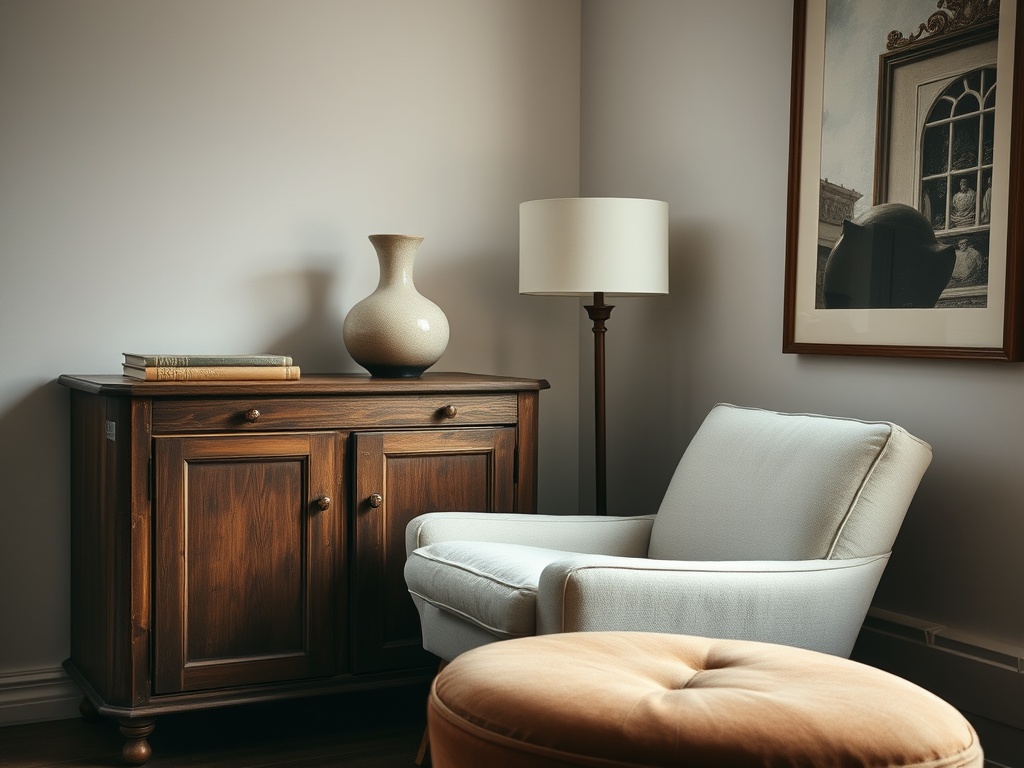
Lighting can bridge styles because a fixture combines shape, material, and function. A contemporary globe pendant may look natural above a vintage dining table. An older ceramic lamp can add texture to a minimalist console. Electrical safety comes first, however. Vintage lamps and fixtures with unknown wiring, damaged cords, or incompatible parts should be evaluated before regular use.
Think in layers rather than a single decorative fixture: ambient light for the room, task light for reading or work, and accent light for art or texture. This allows the vintage and modern pieces to look intentional after dark, not only in daylight.
Keep the Floor Plan Functional
A visually successful room can still fail if circulation is awkward. Do not place a vintage trunk where it narrows a walkway just because it looks good in a photograph. Leave clear paths between doors, seating, and storage. If the room is compact, the guide on using mirrors, rugs, and layout to visually expand space provides practical ways to handle scale without relying on decorative tricks alone.
In open kitchen-living areas, major layout choices also influence the style mix. A kitchen island or peninsula can become the strongest contemporary element in the room, so nearby vintage furnishings may work better as accents rather than another dominant mass.
A Four-Step Editing Pass
First, remove one object from every surface and see whether the room becomes calmer. Second, check whether each large furniture piece has enough space around it to read clearly. Third, repeat one material or color from a vintage piece in a modern one. Fourth, look for anything that feels like a costume prop rather than something you genuinely use or value.
Do not “distress” new objects only to make them appear old unless that finish truly suits the piece. Authentic contrast is usually more convincing than forced age.
Aim for Continuity Instead of a Perfect Match
A good vintage-modern room tells one story through different eras. Preserve the character you value, choose modern additions for function and restraint, and use repetition, scale, and open space to connect them. If you can remove an object without the room losing its identity, editing may improve the result more than another purchase.
This interior-design content is for informational and educational purposes only. Electrical, structural, preservation, and installation work may require qualified professional guidance and compliance with local requirements.